Thambar 90mm f/2.2
✦ NotableThe only intentionally soft-focus lens in the barnack-era Leitz catalogue. Rare, beautiful, and fully reissued in 2017 — the Thambar defines portraiture by deliberate optical imperfection.
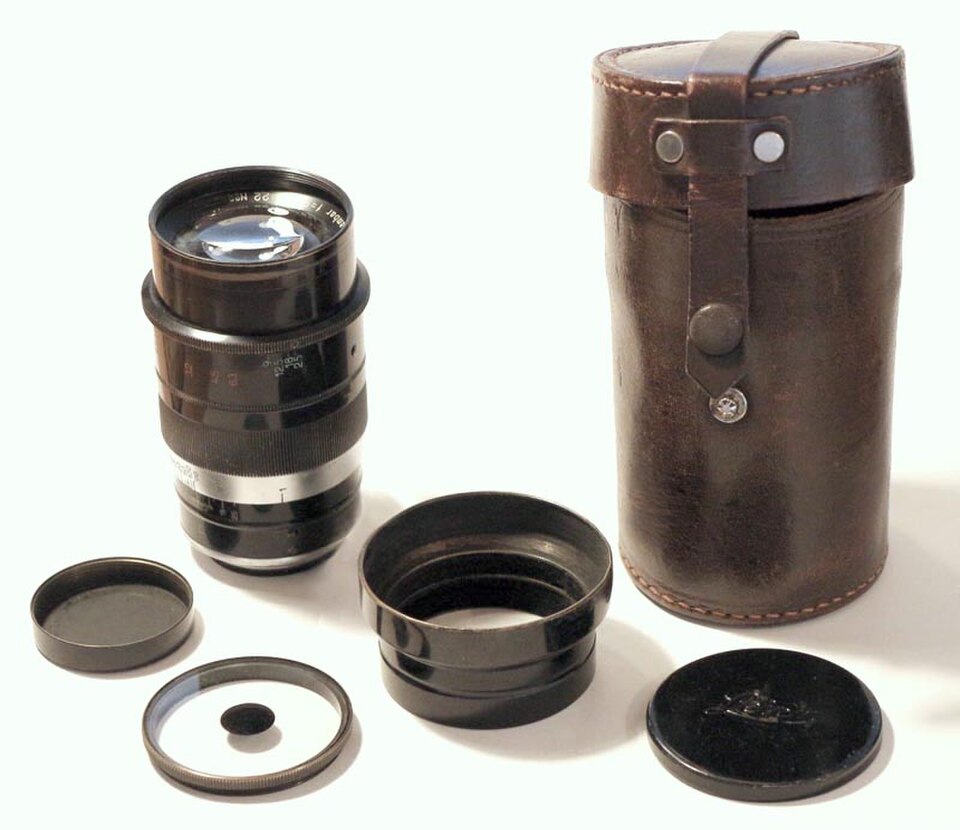
Famous for
- Leica's legendary soft-focus portrait lens of the 1930s, designed to render with a controlled spherical aberration glow
- Revived as a modern limited edition in 2017, confirming its cult status among portrait photographers
Every other Leitz lens of the 1930s aimed for maximum sharpness. The Thambar went in the opposite direction: its designers deliberately left spherical aberration uncorrected so that portrait subjects would be rendered with a luminous, dream-like softness wide open. A central stop disc could be inserted over the front element to further soften the image by blocking the sharper central rays.
For beginners: the Thambar is one of the most unusual lenses in the Leica canon — a technical step backward executed with great skill. It is a portrait specialist's tool rather than a general-purpose lens. Few were made (around 3,000 over its 14-year run) and surviving examples with their original disc and caps command significant collector premiums. Leica reissued the Thambar in 2017 with updated coatings, introducing it to a new generation of photographers who had only read about the original in magazines. The reissue renders identically in character if not in minute detail.
Key specs
- elements groups
- 4/3
- minimum focus
- 1.2m
- filter size
- Series V
Variants & finishes
The 1935 Thambar 90mm f/2.2 — designed specifically for soft-focus portraiture with a central spot filter for maximum halation. One of the rarest and most distinctive Leica lenses ever made; almost never used today outside collectors.
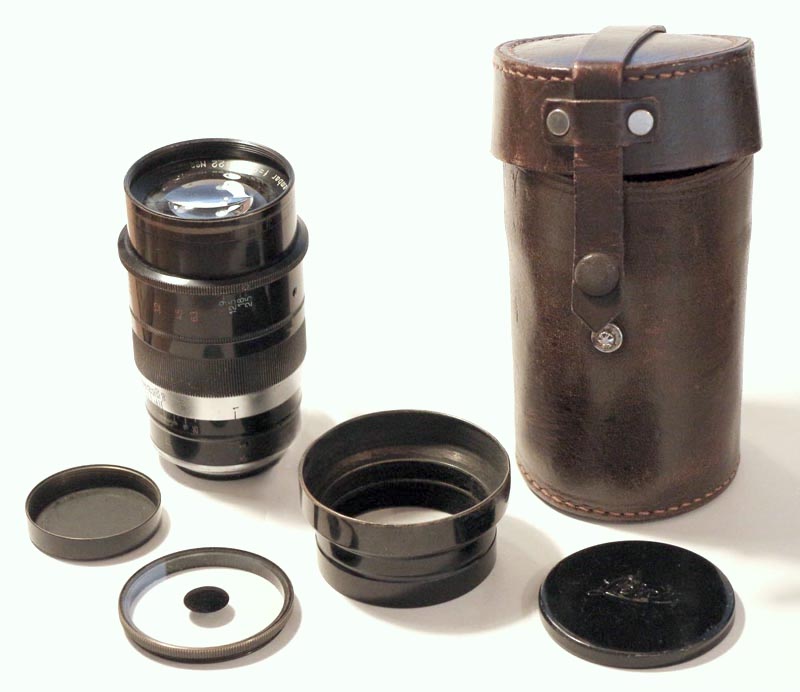
Modern remanufacture of the 1935 Thambar, optically faithful to the original soft-focus design. Includes the reproduction central stop filter; the accessible way to the Thambar look without the fragility and cost of an original.
Market value
Used-market price (USD, estimated median)
Estimates from auction and dealer records — condition and completeness vary.
View data
| Date | Price | Source | Condition |
|---|---|---|---|
| 2016-01 | $2,800 | Rare Soft-Focus Index | Good |
| 2020-01 | $4,200 | Rare Soft-Focus Index | Good |
| 2026-01 | $5,500 | Rare Soft-Focus Index | Good |
Comments
No comments yet — be the first.