Leicaflex
Known as "original Leicaflex"
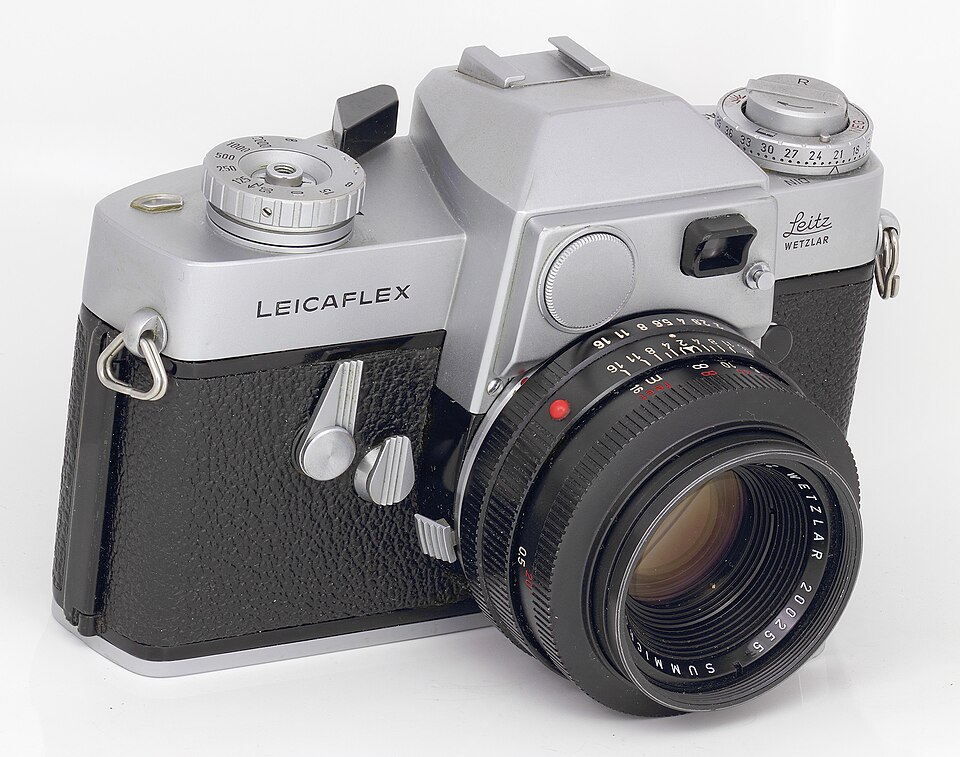
By the early 1960s Leica faced a problem: the SLR was winning. Nikon and Pentax had proven that through-the-lens viewing suited telephoto and macro work far better than any rangefinder. Leica's answer was the Leicaflex, announced in 1964 — a full-frame 35mm SLR with a new bayonet mount and Leica's characteristically over-engineered build quality.
The original Leicaflex was a manual-exposure-only camera, massive by modern standards, and expensive. Its internal metering system read a spot in the focusing screen rather than through the lens — a compromise that would be fixed in the Leicaflex SL (already in the timeline). But it established the R bayonet mount that would underpin Leica SLRs all the way through the R9 in 2002.
For newcomers: the SLR (Single-Lens Reflex) uses a mirror to let you see exactly what the lens sees. Every DSLR descends from this concept. The Leicaflex was Leica's bid to compete in that world while keeping the quality bar from the M system.
Key specs
- type
- SLR, manual exposure only
- metering
- external spot via separate window (not TTL)
- mount
- Leica R bayonet (first)
- shutter
- cloth focal plane, 1/2000s max
- produced
- 1964–1968
Market value
Used-market price (USD, estimated median)
Estimates from auction and dealer records — condition and completeness vary.
View data
| Date | Price | Source | Condition |
|---|---|---|---|
| 2016-01 | $150 | Dealer Median | Good |
| 2020-01 | $220 | Dealer Median | Good |
| 2026-01 | $300 | Dealer Median | Good |
Comments
No comments yet — be the first.