Leica R8
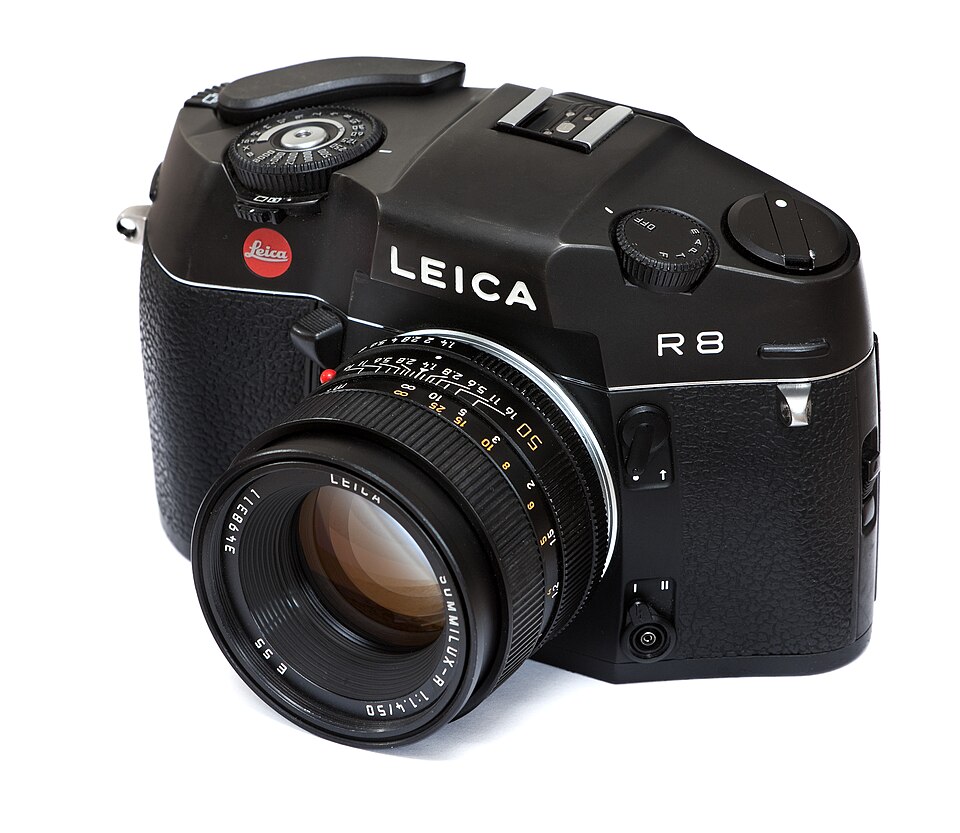
Famous for
- The last and most refined R-mount SLR, with a built-in motor drive and large ergonomic grip
- Often used with APO-Telyt and APO-Summicron-R lenses by wildlife and sports photographers
The Leica R8, introduced in 1996, was the penultimate R-system SLR (the R9 followed in 2002 with a digital back option). It is a large camera by any standard — deliberately so, with an ergonomic grip and a substantial body that gave it a distinctive profile unlike any other Leica. It accepted all R-mount lenses and offered modern multi-mode metering, multiple exposure options, and compatibility with the Digital-Modul-R back when used with the R9.
The R8 was Leica's most technologically complete SLR, and it sold respectably to professionals who valued Leica R optics and build quality. When Leica discontinued the R system entirely in 2009, the R8 and R9 became the final expression of Leica's forty-year experiment in SLR photography. R lenses are now frequently adapted to mirrorless bodies, giving them a second life.
Key specs
- type
- 35mm SLR
- mount
- Leica R
- metering
- multi-zone, spot, center-weighted
- shutter
- metal focal-plane, 16s–1/8000 + B
- production
- 1996–2002
Variants & finishes
The R8 in silver — Leica's flagship SLR of the late 1990s with a distinctive asymmetric grip designed by Porsche Design. The R system's most capable body before it was discontinued.
Black R8 — same Porsche-designed body and multi-mode exposure system as the silver. The black finish is the more commonly seen variant and preferred for a less conspicuous look.
Market value
Used-market price (USD, estimated median)
Estimates from auction and dealer records — condition and completeness vary.
View data
| Date | Price | Source | Condition |
|---|---|---|---|
| 2016-01 | $350 | Dealer Median | Good |
| 2020-01 | $450 | Dealer Median | Good |
| 2026-01 | $600 | Dealer Median | Good |
Comments
No comments yet — be the first.