Leica R3
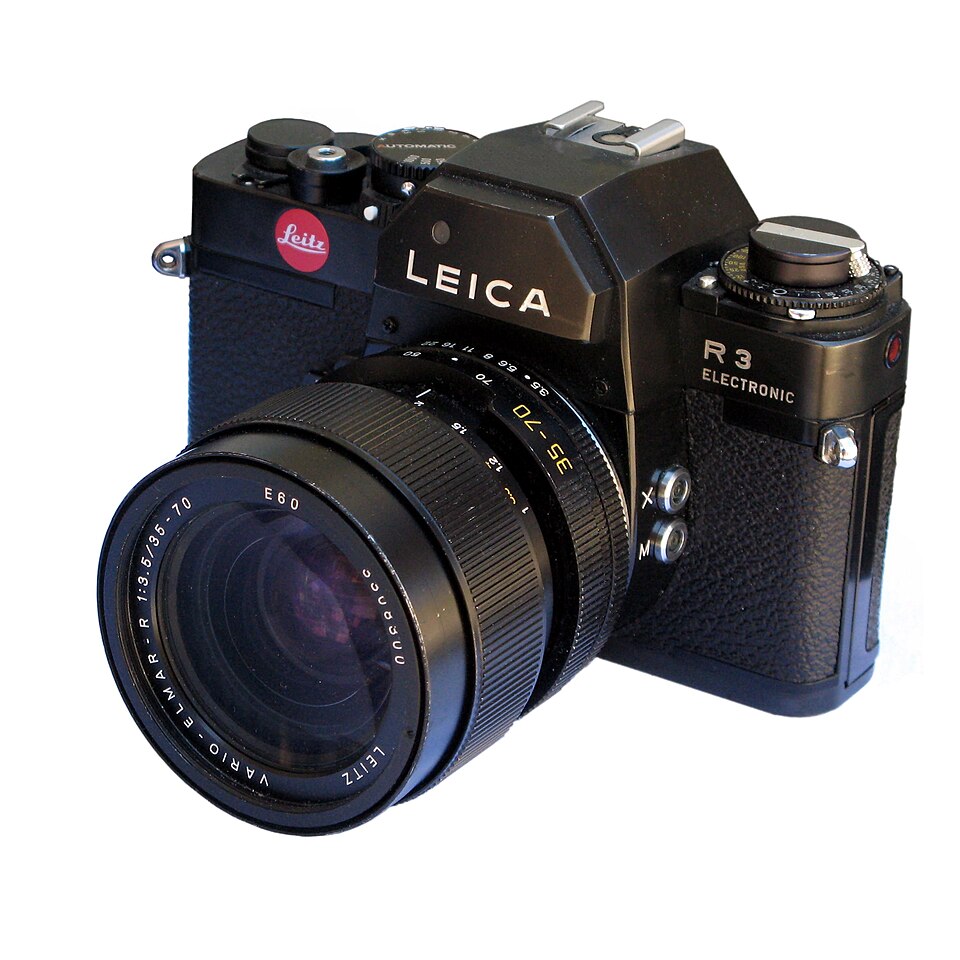
The R3 (1976) marked Leica's first foray into automatic exposure in the SLR line. Developed in cooperation with Minolta and based closely on the Minolta XE, it offered aperture-priority AE alongside manual modes — a pragmatic response to the industry moving toward automation.
The Minolta partnership was controversial then and remains a talking point today: was it a Leica or a rebadged Minolta? The answer is both. Leica contributed the optics, the finishing, and the quality control; Minolta contributed the electronics platform. The collaboration helped Leica survive a period when German camera manufacturing was under severe economic pressure from Japanese competitors.
For newcomers: the R3 sits in an era when photography was becoming more automated. Aperture-priority meant you set the creative variable (depth of field) and the camera handled the technical one (shutter speed). It was the future of cameras, and the R3 brought it to the R system.
Key specs
- exposure
- aperture-priority AE + manual
- metering
- TTL, centre-weighted
- shutter
- electronic cloth, 4s–1/1000s
- platform
- co-developed with Minolta (XE)
- mount
- Leica R
Variants & finishes
The R3 in silver — Leica's 1976 SLR co-developed with Minolta (based on the XE-7 platform). Multi-mode exposure including aperture and shutter priority; a capable and affordable entry into the R system.
Black R3 — same multi-mode metering and Minolta-derived mechanism as the silver version. A practical R-system body for using R-mount lenses at lower cost.
Motor-drive-ready version of the R3 with a modified base for the Leica Motor-Drive-R. Rare as a standalone body; sought by collectors assembling a complete R3 MOT system.

Limited khaki-green finish R3 — functionally identical to the standard body but in a distinctive olive color originally intended for field and outdoor use. Collectible today.

Market value
Used-market price (USD, estimated median)
Estimates from auction and dealer records — condition and completeness vary.
View data
| Date | Price | Source | Condition |
|---|---|---|---|
| 2016-01 | $150 | Dealer Median | Good |
| 2020-01 | $250 | Dealer Median | Good |
| 2026-01 | $350 | Dealer Median | Good |
Comments
No comments yet — be the first.