Leica IIIf
✦ NotableThe most-produced Barnack Leica and the workhorse of mid-century photojournalism. The IIIf's addition of flash synchronization made it the most complete screw-mount body Leica ever made, and its production numbers reflect how widely it was trusted.
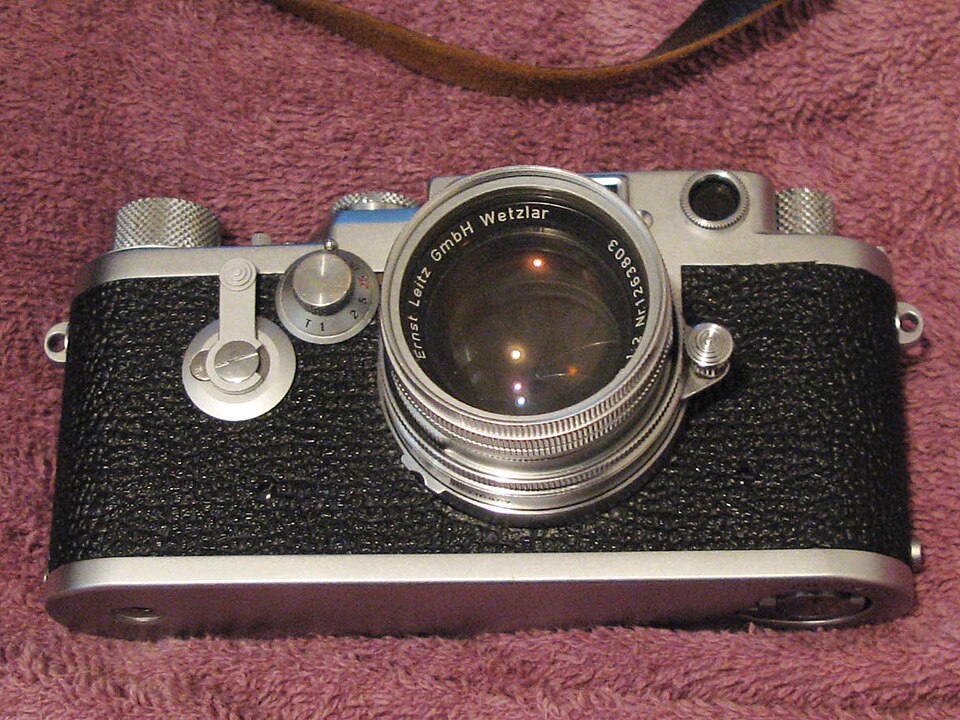
Famous for
- The most-produced Barnack Leica and the workhorse of Korean War photojournalism
- David Douglas Duncan used screw-mount Leicas extensively during the Korean War
The Leica IIIf, produced from 1950 to 1956, was the most-produced camera in the Barnack lineage, with over 180,000 units manufactured. It added flash synchronization — both for bulb and later electronic flash — making it more versatile for studio and event work than any previous Barnack model. The "f" in the name stands for flash.
By the early 1950s, the Barnack Leica had been refined to a high degree. The IIIf was the beneficiary of two decades of incremental improvements: a smoother shutter, better fit and finish, and the flash sync that working photographers needed. It was the camera of choice for a generation of photojournalists operating in the years before the M3 arrived in 1954. Many photographers kept their IIIf bodies even after acquiring an M3, because the screw-mount lens ecosystem was vast and the camera was genuinely capable. The IIIf represents the pinnacle of the Barnack design before Leica reinvented itself with the M system.
Key specs
- type
- 35mm rangefinder
- flash sync
- yes (bulb and electronic)
- shutter
- cloth focal-plane, 1s–1/1000s + B
- production
- ≈180,000 units (1950–1956)
- mount
- Leica screw (LTM / M39)
Variants & finishes
The very first IIIf production run; the self-timer dial is red, making it easy to date an early body. Functionally identical to the later black-dial version.

Revised cosmetics with a standard black self-timer dial — the more common and slightly later version of the IIIf you'll find on the used market.

Photographs made with this equipment1

Market value
Used-market price (USD, estimated median)
Estimates from auction and dealer records — condition and completeness vary.
View data
| Date | Price | Source | Condition |
|---|---|---|---|
| 2016-01 | $250 | curated-estimate | user |
| 2017-01 | $250 | curated-estimate | user |
| 2018-01 | $275 | curated-estimate | user |
| 2019-01 | $300 | curated-estimate | user |
| 2020-01 | $325 | curated-estimate | user |
| 2021-01 | $375 | curated-estimate | user |
| 2022-01 | $400 | curated-estimate | user |
| 2023-01 | $425 | curated-estimate | user |
| 2024-01 | $450 | curated-estimate | user |
| 2025-01 | $475 | curated-estimate | user |
| 2026-01 | $500 | curated-estimate | user |
Comments
No comments yet — be the first.