Leica 0-Series
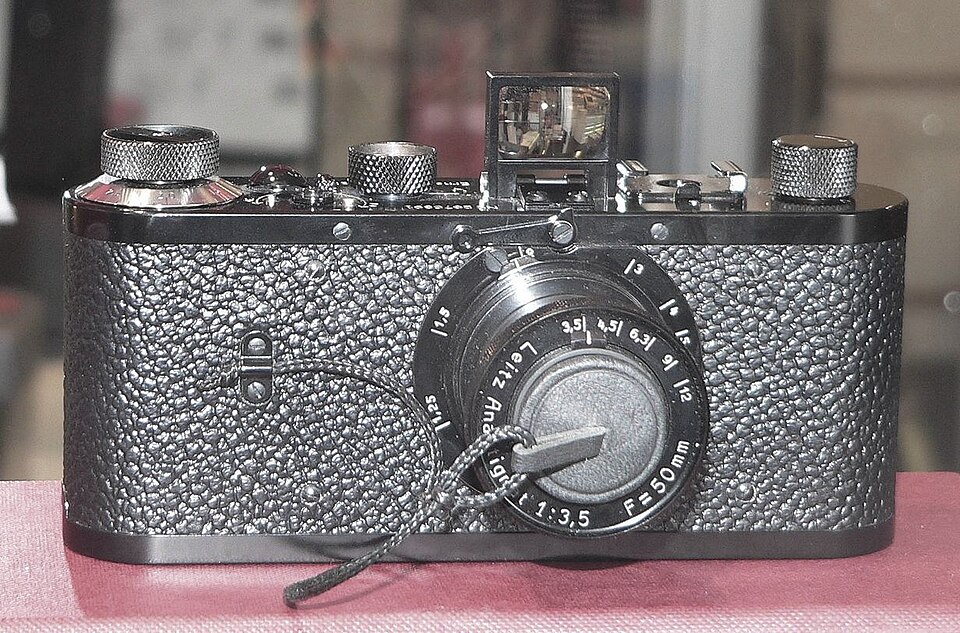
Iconic CameraThe rarest and most historically significant Leica ever made. The 0-Series prototype established 35mm photography as a serious medium and directly led to the mass-produced Leica I. No. 105 set the all-time auction record for any camera at €14.4 million in 2022.
Famous for
- Oskar Barnack's 1914 prototype — the Ur-Leica that proved 35mm cine film could make serious photographs
- Never sold in its time; only rediscovered after Barnack's death
In 1923, Oskar Barnack convinced Ernst Leitz II to produce around 25 hand-built prototype cameras for real-world testing. These were not toys: they went out to photographers, journalists, and Leitz staff to prove a radical idea — that a tiny camera loaded with 35mm motion-picture film could produce enlargements worthy of exhibition. Most were recalled and destroyed; fewer than a dozen survive today.
The Leica 0-Series is the original ancestor of every M camera ever made. It established the 24×36mm frame format that became the global standard for "35mm" photography, and it proved that small, quiet, and portable could coexist with image quality. In May 2022, one example (no. 105) sold at auction for €14.4 million, making it the most expensive camera ever sold. For beginners: this is the camera that started it all — before the 0-Series, serious photographers carried large, cumbersome view cameras. After it, the world changed.
The 0-Series established that photography could be spontaneous, intimate, and available-light capable. Every street photographer working today is, in some sense, working in its shadow.
Key specs
- type
- 35mm prototype rangefinder (no RF)
- film
- 35mm cine film (perforated)
- frame size
- 24×36mm
- production
- ≈25 units (1923)
- auction record
- €14.4M (no. 105, 2022)
Market value
Used-market price (USD, estimated median)
Estimates from auction and dealer records — condition and completeness vary.
View data
| Date | Price | Source | Condition |
|---|---|---|---|
| 2016-01 | $1,200 | Auction Index | Mint |
| 2020-01 | $1,900 | Auction Index | Mint |
| 2026-01 | $2,500 | Auction Index | Mint |
Comments
No comments yet — be the first.