Elmar 50mm f/3.5
Iconic LensThe lens that launched Leica. Max Berek's collapsible Tessar-type 50mm was supplied with every Leica I in 1925 and remained in production for 36 years — the foundation of the entire Leica optical legacy.

Famous for
- Max Berek's original design — the lens supplied with every Leica I in 1925
- A Tessar-type formula that remained in production for 36 years
In 1925 Ernst Leitz II took a risk and launched the Leica I, the world's first practical 35mm camera designed around motion-picture film. The lens attached to every one of those first cameras was a 50mm f/3.5 designed by Dr. Max Berek — a modified Tessar formula with four elements in three groups that could be collapsed into the body for pocket carry. Without this lens there is no Leica story.
For beginners: f/3.5 sounds slow by modern standards but in 1925 it was entirely workable. The Tessar-type formula was chosen because it is compact, sharp in the centre, and relatively easy to manufacture to consistent tolerances. Berek's genius was adapting it to fit inside a body small enough to slip into a jacket pocket — previously "serious" cameras were the size of shoeboxes. The Elmar 50mm f/3.5 remained in production, in gradually evolved forms, until 1961: 36 years, a remarkable run that speaks to how right Berek got the original design.
Key specs
- elements groups
- 4/3
- formula
- Tessar-type
- minimum focus
- 1m
Variants & finishes
The current collapsible Elmar 50mm f/3.5 — a classic pancake design dating to the 1920s, produced continuously. Extremely compact when collapsed; the original slow-but-tiny travel lens for M and screw-mount Leicas.
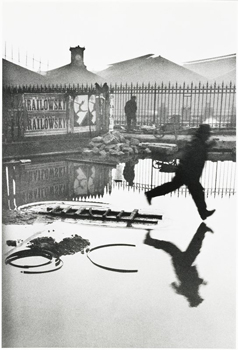
Photographs made with this equipment1
Market value
Used-market price (USD, estimated median)
Estimates from auction and dealer records — condition and completeness vary.
View data
| Date | Price | Source | Condition |
|---|---|---|---|
| 2016-01 | $200 | Barnack Classic Index | Good |
| 2020-01 | $300 | Barnack Classic Index | Good |
| 2026-01 | $400 | Barnack Classic Index | Good |
Comments
No comments yet — be the first.